
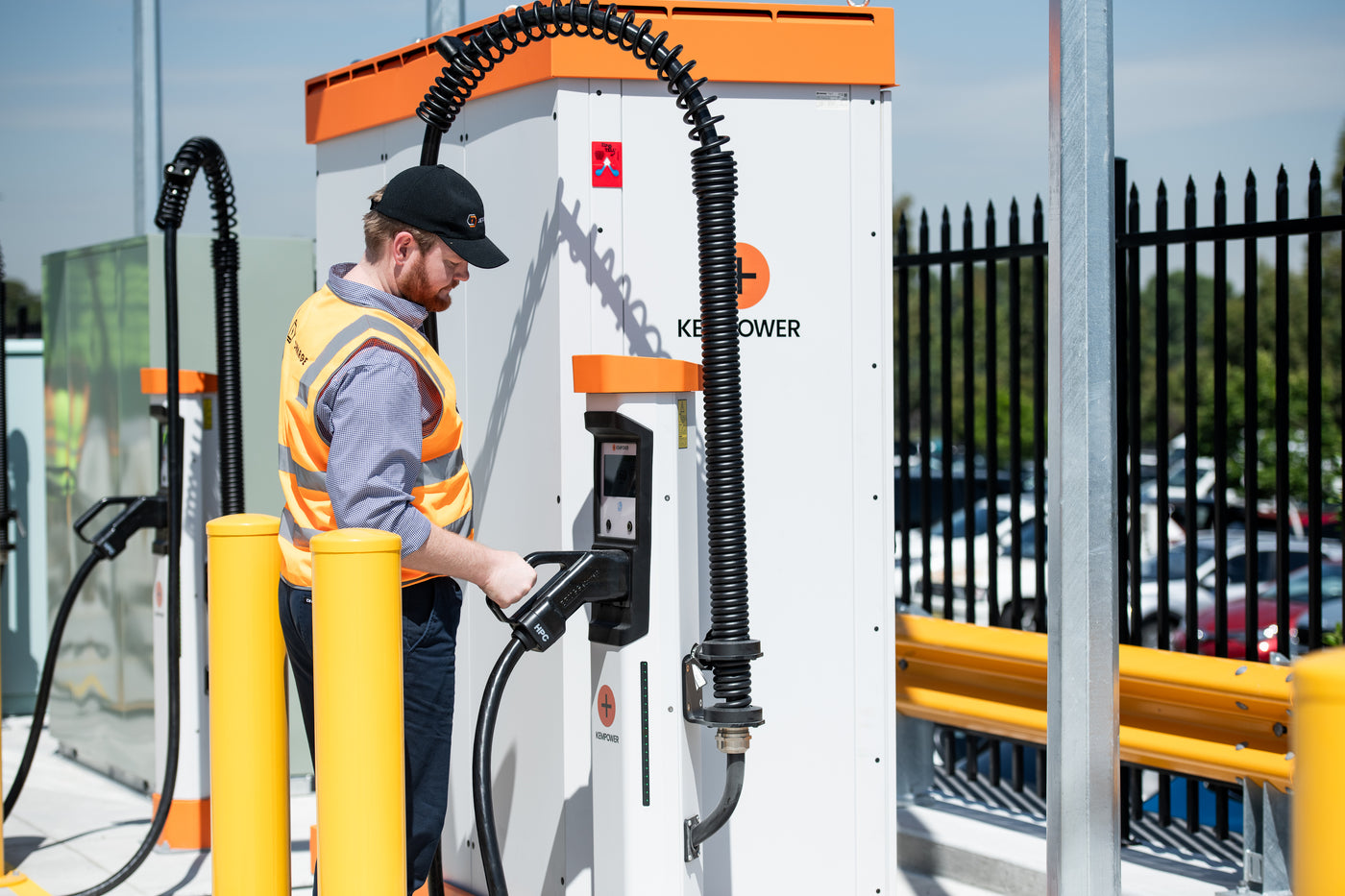
What to look for in a Commercial Charger
Here are some key factors that determine what charger will actually work on your site
Before You Choose
Upskill with JET Charge
If you’re looking to better understand charger selection and commercial setups, explore this training course that covers the fundamentals.
Our Chargers Range
We work across multiple charger brands rather than a single option. Different sites require different setups, from power and connectivity to how the chargers will be used so having flexibility across brands makes it easier to match the right hardware to the job.
AC Chargers
-
![]()
Autel Range
Autel offers a strong balance of performance and affordability across a wide range of AC chargers. With flexible connectivity options (WiFi, Ethernet, 4G) and some models offering up to 5‑year warranty, they’re a practical choice for most commercial installs where reliability and cost need to be balanced.
Best for: Cost-effective commercial installs with flexible setup options
-
![]()
Schneider Range
Schneider chargers are a premium option designed to work within broader building electrical systems. They are typically used in projects where Schneider equipment is already specified, or where consistency across switchgear, protection, and EV charging is important.
Best for: Projects standardised on Schneider electrical infrastructure or premium commercial builds
-
![]()
Other Chargers
Other OCPP-compliant chargers are available depending on specific site requirements. These can include public charging setups, solar-integrated systems, or projects where brand preference or existing infrastructure drives the decision.
Best for: Specific use cases such as public charging, solar integration, or client-driven brand selection


DC Chargers
-
![]()
Entry Level (30kW)
30kW DC chargers are an entry point into fast charging, offering faster charging than AC without major infrastructure upgrades. They are typically used for smaller sites looking to offer DC charging without the cost and complexity of higher-powered setups.
Best for: Budget-conscious installs or first DC deployments
-
![]()
Standard Commercial (50-60kW) Range
This is the most common range for commercial DC charging. They are widely used in public, retail, and mixed-use environments where faster turnaround is required without going into high-power territory.
Best for: Most commercial sites needing reliable fast charging
-
![]()
Flexible / Moveable
They provide flexibility where a fixed installation isn’t ideal. These units can be repositioned, making them useful for temporary setups, pilot projects, or sites where layout may change over time. They can also reduce upfront infrastructure requirements in certain scenarios.
Best for: Sites with limited infrastructure or where flexibility in placement is required


Tell us about the project you’re working on. We can help you choose the right setup, scope the job, and avoid issues early.
Blog
Frequently Asked Questions
What's the difference between a socketed and tethered charger?
What's the difference between a socketed and tethered charger?
A socketed charger has a Type 2 socket - the user plugs in their own cable.
A tethered charger has a cable permanently attached.
Socketed is the go-to for most commercial sites - it's more flexible when different drivers and vehicles are using the charger, and cables are easy to replace if damaged. Tethered suits dedicated bays where the same vehicle parks every day (e.g., a company car).
Do I need load management, and when?
Do I need load management, and when?
Not always for 1–2 chargers, but essential as you scale. Explain CORE at a high level, it monitors the building's spare capacity and dynamically shares power, so chargers don't overload the switchboard.
Even if you don't need it right away, it's worth planning for it during the initial install - much easier than retrofitting later.
How does billing work - can I charge users for electricity?
How does billing work - can I charge users for electricity?
Yes. Two options:
Chargefox (public billing) — the charger appears on the Chargefox app. EV drivers find it, tap to start, and pay per kWh. Best for sites open to the public.
JET Charge Billing (private billing) — each user gets an account and is billed for their own usage. The site owner sets the tariff. Best for apartments, offices, or restricted-access sites.
Either way, the EV driver pays for their own electricity - the site owner isn't left footing the bill.
How does RFID access and payment work?
How does RFID access and payment work?
RFID cards let you control who can use the charger. Each authorised user gets a card linked to their account - tap to start, tap to stop. Usually is included with most commercial chargers.
Useful for apartments (residents only), offices (employees only), or any site where you want to restrict access. Cards can be activated or deactivated remotely, and work alongside app-based access.
Is there volume or wholesale pricing for electrical contractors?
Is there volume or wholesale pricing for electrical contractors?
Yes. Registered contractors on the JET Charge Partner Store get wholesale pricing, with further discounts at 2+ units and 11+ units. For some of our top selling chargers, we provide discounted trade pricing even when you buy 1.
Sign up for a Partner Store account to view live pricing and order directly.
Where can I find installation drawings, datasheets, and sales templates?
Where can I find installation drawings, datasheets, and sales templates?
You can find relevant resources for each charger on its listing page. Some of them are also available in the resources section once you're logged in - install guides, wiring diagrams, datasheets, and customer-facing sales templates.
Can't find what you need? Reach out to the JET Charge team and we'll send it through.
*Ability to add 5 times more chargers vs no load management system on the same power supply.
^Subject to credit approval